On a crisp Saturday morning in September, more than 80 volunteers gathered in the North Valley Food Bank (NVFB) parking lot, ready to spend their morning picking apples. Armed with bins, basket pickers and maps of fruit trees across Whitefish, they headed out to harvest their assigned trees.
A few hours later, our volunteers returned with an abundance of apples, pears and plums and we opened our doors for our annual Harvest Fest celebration. Our parking lot transformed into a gathering place for neighbors of all ages and walks of life. Families enjoyed activities, such as quick pickling and bean art, visited our partner booths to learn about composting, bear awareness and sustainability, and pressed cider while our team in June’s kitchen served a delicious lunch through our pop-up pay-what-you-can restaurant. The menu included miso-glazed chicken, delicious brats, beet burgers and other seasonal favorites prepared by the talented participants of our latest incubator kitchen cohort. We even had a surprise bluegrass band show up, thanks to North Valley Music School, and between all the hustle my 4-year old and her tiny friends had the best day ever dancing and reading books from our kids corner to each other!
I loved seeing our customers, volunteers, supporters and community members gathered around the same tables, sharing food and enjoying a beautiful fall afternoon. Harvest Fest embodies NVFB’s belief that everyone belongs and every year we love to extend the table to make room for more of our neighbors.
My heart is still full from the shared experience of harvesting fruit for our communities, eating a meal together and sharing stories over fresh cider. The spirit of Harvest Fest carries our team through the busy winter months ahead and I wanted to share a few updates about what your partnership has made possible and what we are working on.
Thank you for another incredible Great Fish Community Challenge!
Just one day before Harvest Fest, we celebrated the final hours of another remarkable Great Fish Community Challenge. More than 400 donors came together to help us exceed our ambitious $300,000 fundraising goal!
I am deeply grateful for the generosity of everyone who participated and for the team of the Whitefish Community Foundation, who continues to bring our community together through this wonderful tradition.
Last year, NVFB was honored to receive the Great Fish Award, recognizing our organization's commitment to rooting for each other as we meet the evolving needs of our communities and build strong partnerships across Northwest Montana.
We are now excited to pass the Great Fish along to another incredible organization and hope you will join us at the Whitefish Community Foundation's Great Fish Awards Ceremony on Thursday, October 22, from 5-7 p.m. at the Wachholz College Center for the Great Fish Awards Ceremony.
A busy harvest season in June's Kitchen
Harvest Fest also happened during one of the busiest seasons in June's Kitchen. Our Culinary Arts Manager, Rachael, and our wonderful kitchen volunteers have been hard at work transforming thousands of pounds of locally grown and rescued produce into apple sauce and tomato sauce.
In addition, they continue to transform rescue food and local food into nourishing ready-to-(h)eat meals. To date, they have made over 10,000 meals in 2026 and some of my recent favorites included a June’s Kitchen lasagna, and roasted corn and mushroom soup.
I am especially grateful for our regular longtime kitchen volunteers, the new people who have joined Rachael in the kitchen this year and the students from Whitefish Independent High School who will be with us for a weekly volunteer (and learn kitchen skills) shift.
Our Farm to Food Bank program is celebrating another successful growing season as well. Working alongside our local farmers, we have already harvested more than 11,000 pounds of fresh produce, and the heavy root vegetables aren't even in yet! Our team loves this program because it supports our local farmers, reduces food waste, and shares an abundance of fresh, nutritious produce with our neighbors.
Overcoming barriers to food access
We continue to welcome more than 1,500 neighbors through our food access services every week. With the rising costs of housing, groceries, transportation and healthcare, many families are finding it increasingly difficult to make ends meet.
One of the things we heard during our recent strategic planning process was that our Free Grocery Store hours were not always accessible for working families. In September, we responded by adding an additional hour on Tuesday evenings, keeping our store open until 7 PM. Additionally, we have been working closely with the Flathead Giving Table volunteers who pick up and deliver food for families with transportation barriers.
Our rural food access programs are evolving, too!
This summer, we successfully completed our first year of the Summer Meals program in Trego, sharing 8,410 summer lunches in addition to the regular groceries at our Trego Mobile Pantry. The summer months can be challenging for many of our rural neighbors because kids don’t get their lunches at school and many live far from traditional summer meal sites. We are excited that this trial year was a success and ensured accessible lunches for families in Trego and beyond.
Further, the Trego and Eureka communities have been organizing themselves to pick-up food for neighbors who can’t make it to the distribution due to mobility or transportation challenges. It’s inspiring how everyone watches out for one another and because of that we are able to provide 70% of the food that goes to Trego to seniors and families with children.
Finding creative solutions to food procurement and transportation
Behind the scenes, our Director of Operations, Lauren, has been working hard to find new ways to keep nutritious food on our shelves while managing rising costs of food and reductions in federal food assistance.
One of our biggest challenges this year has been a decline in the meat we receive through The Emergency Food Assistance Program (TEFAP), following federal funding cuts last year. Meat is an important source of protein for many of our customers, and purchasing enough to make up for the shortfall has significantly increased our food expenses.
Lauren has been exploring bulk purchasing opportunities and coordinating orders with partner pantries across Montana so we can share purchasing power and stretch our resources further.
I am also grateful to the donors who stepped up specifically to help us purchase meat this year. Their support has made a meaningful difference.
With the wild game processing season just around the corner, we are looking forward to working with our wonderful volunteer processors and local hunters to bring more protein to our grocery shelves!
In addition, Lauren has strengthened local bulk purchasing and around one quarter of our food budget is now spent on local food from over 11 local farmers and our local meat processors. Bulk purchasing and new avenues of food procurement have also helped stretch funding for shelf-stable food.
Moreover, we were able to purchase a fork lift with funding from the Whitefish Community Foundation Community Grant, Round Up for Safety, and one of our close family foundation partners. The forklift will come in time for the holiday season and allows us to safely move and store heavy pallets of food, reduce the risk of injuries for our staff and volunteers, and make better use of our warehouse space. It also means we can receive bulk deliveries, prepare pallets for our mobile pantries and load trucks for our rural pantry partners more efficiently. I am grateful that we can invest in the equipment needed to keep up with growing demand while taking good care of the people who make this work possible!
Standing alongside our neighbors as SNAP benefits change
While our team continues to find new ways to share more food, we are also paying close attention to changes in the public benefit programs that many of our neighbors rely on.
Due to the federal cuts to the Supplemental Nutrition Assistance Program (SNAP), more than 6,000 Montanans have already lost their benefits (see more details and national data from the Center for Budget and Policy Priorities here). This means our neighbors visit local food banks more often and the benefit changes will put additional pressures on more and more households already struggling with the increased cost of living.
At the same time, Montana is preparing to implement new restrictions on SNAP purchases beginning November 1. Families will no longer be able to use their benefits to purchase certain candy, sugary beverages, energy drinks, and packaged desserts. While these changes do not reduce SNAP benefit amounts, they limit how families can use them. Healthy eating may look different for each family as people have different medical needs, cultural food traditions, and household circumstances, for example, someone living with diabetes may need quick access to sugar to treat low blood glucose levels. These restrictions will only create additional challenges for those already struggling to afford groceries.
Further, the rules themselves can be surprisingly complicated. Certain fruit snacks and granola bars may no longer qualify for SNAP while similar products remain eligible. As a parent, I know how challenging packing school lunches and snacks can be without navigating another set of restrictions.
Small rural grocery stores will also face additional challenges updating their systems and training staff. And while the goal is to improve nutrition, there is limited evidence that these restrictions will lead to better health outcomes. Read more about the new restrictions here (note that the article uses an outdated implementation date and changes will now go into effect November 1, 2026)
NVFB and our local food access partners cannot replace the purchasing power of a strong federal nutrition assistance program, no matter how generous our communities are.
That is why we stand alongside our neighbors and advocate for policies that protect access to nutritious food and respect people's dignity and ability to make decisions for their own families.
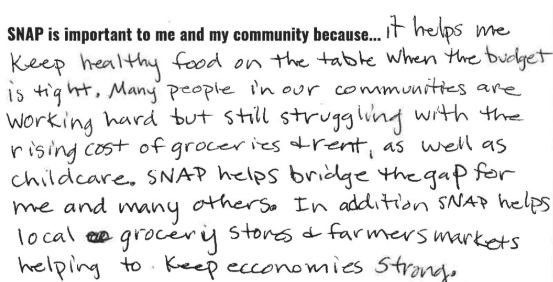
Earlier this year, we joined the Montana Food Bank Network, FAST Blackfeet, and the Helena Food Share to hand deliver 1,500 postcards about the importance of SNAP to our congressional delegation in Washington, D.C. The postcards were collected from Montanans at 12 food banks across the state. One of our local neighbors wrote:
Looking beyond immediate food access
At NVFB, we know that food insecurity rarely exists in isolation. If we want everyone in our communities to have enough nutritious food on their tables, we also need to address the challenges that make it so difficult for families to afford groceries in the first place.
Our new three-year strategic plan, shaped by input from more than 80 community members and 12 partner organizations, focuses on addressing the root causes of food insecurity while continuing to provide reliable access to nutritious food.
A central part of this work is expanding our case management and community resource services. Over the past three years, we launched our case management program and established referral relationships with more than 20 partners in housing, healthcare, and social services.
We now want to build on that foundation by making NVFB a more comprehensive community resource hub. For some neighbors, that means helping them navigate complicated applications for SNAP, housing assistance, or healthcare. For others facing an immediate crisis, (such as an unexpected eviction, a medical emergency, or the loss of employment) it means more intensive, individualized support to help them regain stability. By connecting food assistance with these services, we hope to help families move beyond the immediate crisis and build greater long-term security.
Stronger collaboration is equally central to our response. Last year, we delivered more than 307,000 pounds of food to eight partner pantries, helping smaller and rural organizations serve neighbors who might otherwise have to travel long distances for groceries. We also continue to convene our food access partners through a local Community of Practice and our new plan builds on this regional role by establishing a Regional Food Security Alliance, strengthening partnerships across sectors, and conducting a joint community needs assessment to better understand where services are falling short.
We are also working with Land to Hand Montana to establish an Advisory Council of people with lived experience of food insecurity, ensuring that those most affected help shape programs, organizational decisions, and policy priorities.
At the same time, we will continue investing in local farmers, food rescue, and regional purchasing partnerships to make nutritious food more accessible while strengthening our local food system.
Looking ahead to a special anniversary
Next year will mark a remarkable milestone for NVFB: our 50th anniversary and what would have been the 100th birthday of our founder, June Munski-Feenan.
As we prepare to celebrate these milestones, I find myself thinking about the many people who have helped build this organization over the past five decades. From June and the first dedicated volunteer board to our supporters, volunteers and neighbors who continue her legacy today, our food bank has always been rooted in the simple belief that we should take care of one another.
If you have old pictures or stories of the early food bank years, please share them with us as we gather material for the anniversary!
Thank you for being part of our NVFB community and for helping us build longer tables across Northwest Montana.
With gratitude,
Sophie Albert


